
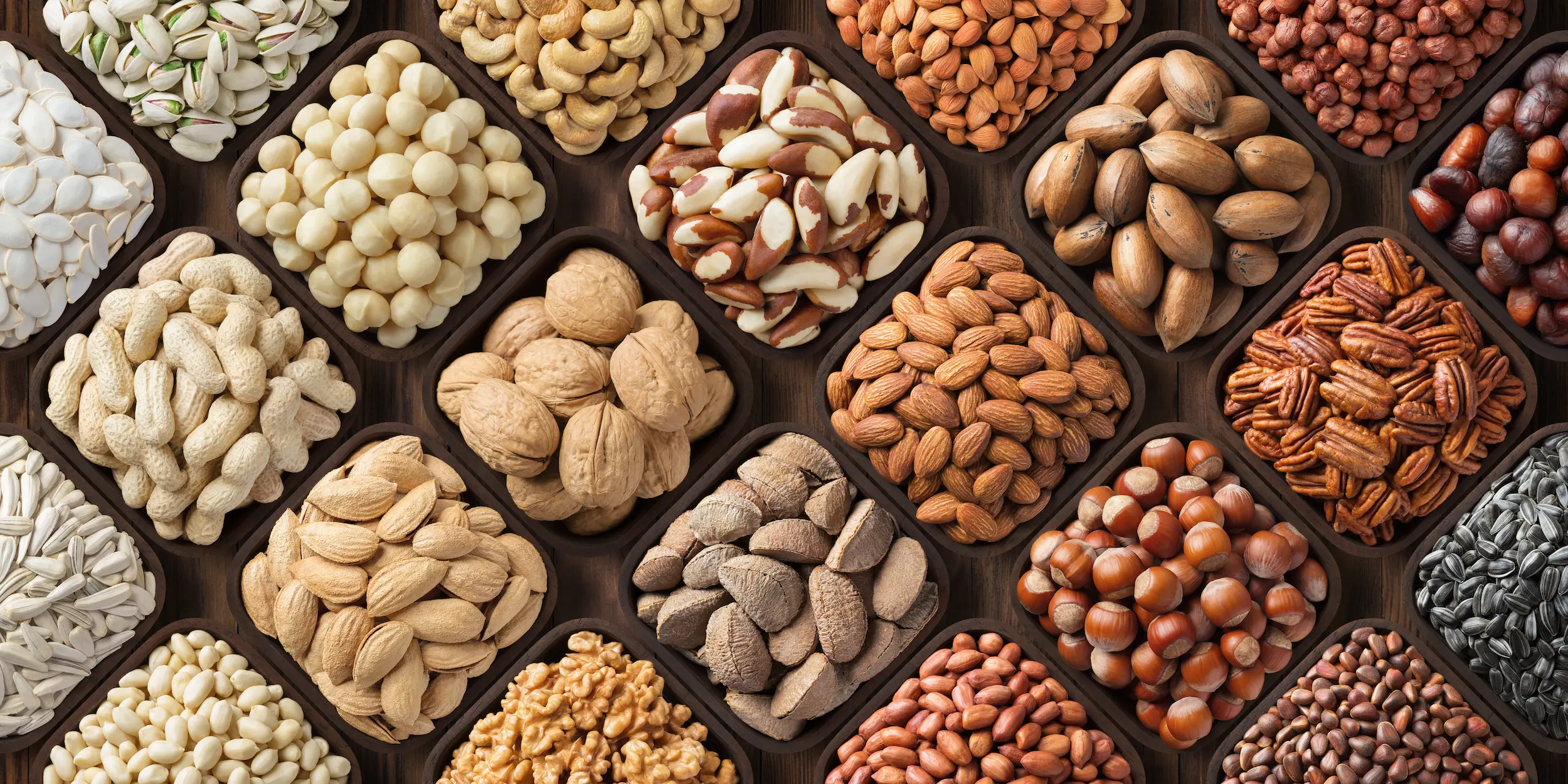
Which minerals can you get from eating nuts?
Nuts have become increasingly popular in recent years, especially as more people look to add plant-based foods to their diets. From almonds and cashews to walnuts and pistachios, the variety available today is far greater than it used to be.
Not only are nuts convenient and versatile, but they are also packed with valuable nutrients. In particular, they are an excellent source of essential minerals that the body needs to stay healthy.
Which minerals are found in nuts?
Nuts provide a wide range of minerals, many of which play crucial roles in maintaining health:
- Magnesium: Found in almonds, cashews and peanuts, magnesium contributes to normal muscle function and supports the nervous system.1
- Zinc: Present in cashews, pecans and pine nuts, zinc supports immune system function and contributes to normal cell division.1
- Iron: Nuts such as cashews and pine nuts contain iron, which is essential for the production of haemoglobin and the transport of oxygen in the blood.2
- Calcium: Almonds are particularly rich in calcium, a mineral that helps to maintain normal bones and teeth.1
- Selenium: Brazil nuts are one of the best dietary sources of selenium, which contributes to the protection of cells from oxidative stress.2
- Copper and manganese: Hazelnuts and walnuts are good sources of copper and manganese, both of which contribute to a normal energy-yielding metabolism.1
The presence of these minerals highlights why nuts are considered an important addition to a balanced diet.
Other nutritional benefits to eating nuts
While minerals are a key strength of nuts, they are far from the only nutrient they provide. Nuts also contain vitamins, macronutrients and essential fatty acids that support health and well-being.
Vitamins
Nuts contain a variety of vitamins, each contributing to specific aspects of health:
- Vitamin E: Found in almonds, hazelnuts and sunflower seeds, vitamin E contributes to the protection of cells from oxidative stress.¹
- B vitamins: Walnuts, pistachios and cashews provide small amounts of B vitamins, including B1 (thiamin), B6 and folate. These vitamins help support energy production, the nervous system and overall metabolic function.²
- Vitamin K: Some nuts, like cashews and pine nuts, contain vitamin K, which contributes to normal blood clotting and bone health.³
By incorporating a variety of nuts into your diet, you can gain both mineral and vitamin benefits, supporting overall health, energy levels and bodily functions.
Macronutrients
In addition to vitamins and minerals, nuts are rich in protein, fibre and healthy fats. The protein content helps with the growth and maintenance of muscle mass, while fibre supports digestive health and helps maintain a feeling of fullness.2 Healthy unsaturated fats in nuts also contribute to maintaining normal blood cholesterol levels when eaten as part of a balanced diet.2
Alpha-linoleic acid (ALA)
Walnuts in particular are a plant-based source of alpha-linoleic acid (ALA), an omega-3 fatty acid that contributes to the maintenance of normal blood cholesterol levels.¹ Including nuts like walnuts in your diet can therefore help increase your intake of plant-based omega-3s.
Nuts offer a variety of minerals, such as calcium, magnesium, zinc, iron and selenium, and are a convenient and nutrient-dense food. They also provide vitamins, protein, fibre and healthy fats, with walnuts providing plant-based omega-3 in the form of ALA.
You can easily increase your intake of vital nutrients by including a variety of nuts in your daily diet. For example, they can be enjoyed as a quick snack on their own, added to breakfast cereals or yoghurt, blended into smoothies, or incorporated into salads for extra crunch and nutrition. Nuts also work well in baking, such as in muffins, granola bars or energy bites, and can be sprinkled over roasted vegetables or main dishes for added flavour and health benefits.
As usual, moderation is essential because nuts are high in calories. Speaking with a medical or nutrition expert can provide tailored guidance if you are unsure about your dietary requirements. By including a variety of nuts thoughtfully throughout your meals and snacks, you can finish the day having supported your intake of essential vitamins, minerals and healthy fats while enjoying delicious, versatile foods.
References
[1] Great Britain Nutrition and Health Claims Register. (2024). Authorised nutrition and health claims. Available at: https://www.gov.uk/government/publications/nutrition-and-health-claims-great-britain-register
[2] NHS. (2023). Vitamins and minerals – The basics. Available at: https://www.nhs.uk/conditions/vitamins-and-minerals/