


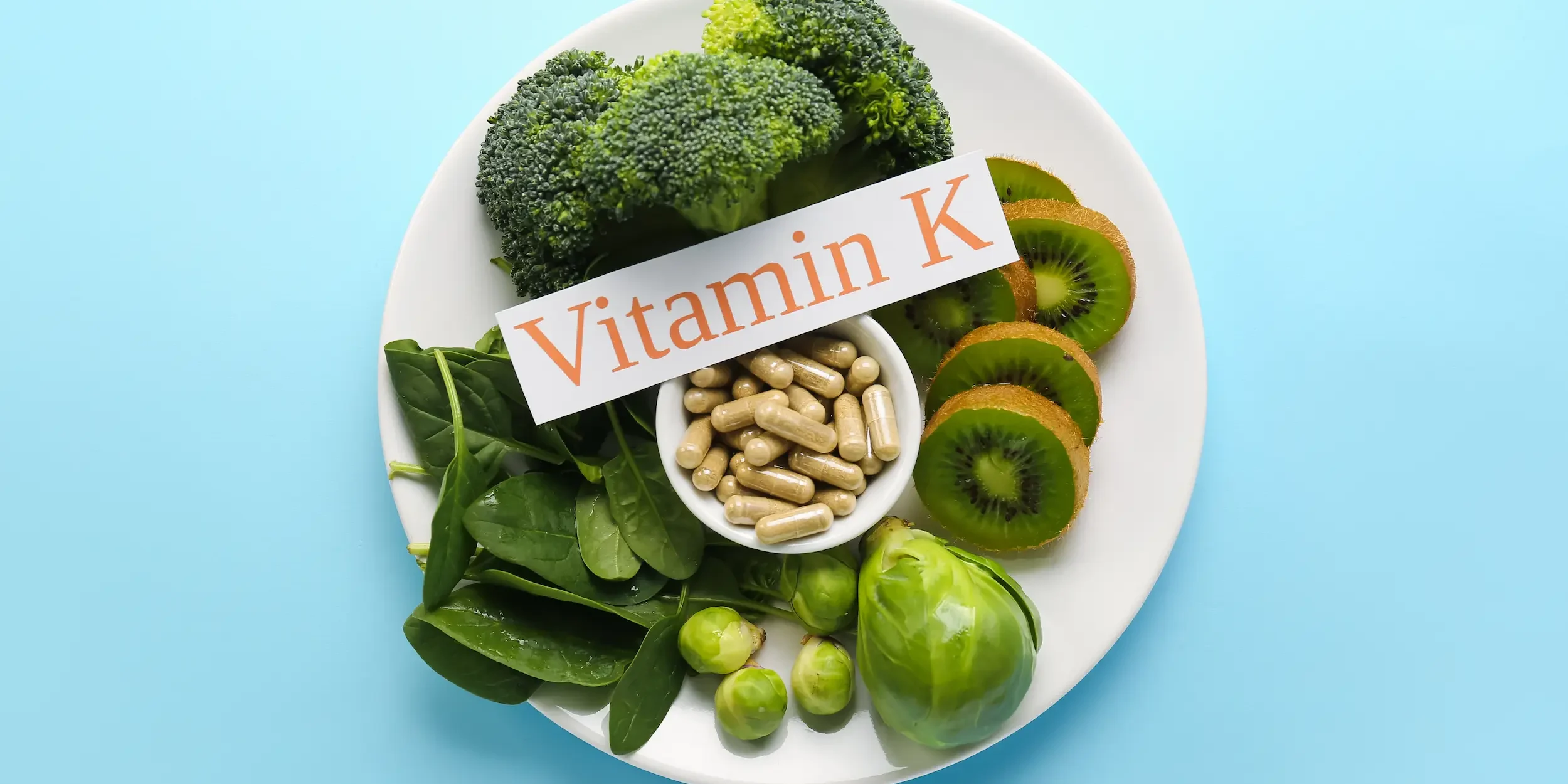
Are vitamin K supplements safe?
Adding a new supplement to your routine is often a positive step for your health. However, you might worry about potential side effects or how a new nutrient will interact with your body. This caution is sensible.
Vitamin K isn’t as well known as vitamins C or D, but it plays a critical role in our biology. It’s essential for bone health and proper blood clotting. While it’s generally considered safe for most people, it’s not suitable for everyone.
If you have any specific health concerns, we always recommend speaking to a healthcare professional. This is especially true if you take medication affecting your blood or if you have an underlying health. A doctor or pharmacist can provide specialised advice tailored to your medical history.
What are the side effects of vitamin K supplements?
For the vast majority of people, vitamin K supplements are safe. Side effects are rare when the supplement is taken at recommended doses.
However, reactions can happen. As with many supplements, your body may need a brief adjustment period. The most common complaints are usually mild gastrointestinal issues.
For example, you might experience an upset stomach or slight nausea. Some people report diarrhoea or general abdominal discomfort. These symptoms often subside as your system gets used to the supplement. Taking the tablet with a meal can often help to minimise these effects.
If these symptoms persist, stop taking vitamin K. Consult your doctor to rule out other causes or to try a different formulation.
What happens if you get too much vitamin K?
Vitamin K is fat-soluble. This usually means that the body stores excess amounts, leading to potential toxicity if too much is taken (as seen with vitamin A). However, vitamin K is unique. The body breaks it down and excretes it relatively quickly.
Because of this, true toxicity from natural forms of vitamin K (K1 and K2) is exceptionally rare. Even at high doses, adverse effects are uncommon in healthy adults.
However, “rare” does not mean impossible. Very high doses can potentially cause issues, including the breakdown of red blood cells in extreme cases. For a balanced approach to intake, stick to recommended limits of vitamin K unless a doctor advises otherwise.
Can vitamin K supplements cause blood clots?
This is a very common fear. Vitamin K is famous for its role in helping the blood to clot. Naturally, people worry that taking vitamin K supplements might cause “too much” clotting.
Fortunately, that’s not how it works. Vitamin K does not directly trigger clots. Instead, it activates the proteins that your body uses to clot blood when necessary (like when you get a cut).
Think of vitamin K as the fuel for the clotting machinery. If you are deficient, the machinery works slowly. If you take supplements, you fill the tank and the machinery runs at maximum efficiency. It won’t run faster than normal. It will simply work as intended.
Therefore, taking supplements will not put you at risk of spontaneous blood clots any more than getting enough vitamin K from a healthy diet would. All it does is help to ensure that your blood can clot well when you need it to.
Does warfarin inhibit vitamin K?
While vitamin K does not cause clots in healthy people, it interacts significantly with blood-thinning medications (otherwise known as anticoagulants) like warfarin.
Warfarin and similar drugs are classified as vitamin K antagonists. This means they work by deliberately blocking the action of vitamin K. By inhibiting vitamin K, these drugs slow down the body’s clotting ability to protect patients who are at risk of dangerous clots.
If you take warfarin, adding a vitamin K supplement works against the drug. You are essentially introducing the very substance that warfarin is designed to eliminate. This can make the medication less effective, increasing the risk of clots forming despite the medication.
For this reason, people on anticoagulants must maintain a consistent vitamin K intake. If this applies to you, do not start a vitamin K supplement without express permission and monitoring from your doctor.
References
- Vitamin K: Fact Sheet for Health Professionals. National Institutes of Health (NIH), Office of Dietary Supplements.
- The health benefits of vitamin K. DiNicolantonio, J. J., et al. Open Heart, 2015.
- Warfarin and Vitamin K. National Health Service (NHS) UK.
- Reversing vitamin K antagonists: making the old new again. Eichinger, Sabine Hematology. American Society of Hematology. Education Program vol. 2016,1
